
Uncategorized
PSYCHOLOGY BEHIND CHECKING YOUR WRIST

The Psychology Behind Checking Your Wrist: Why We Keep Looking at Our Smartwatches
Introduction
Have you ever caught yourself checking your wrist even when your smartwatch didn’t buzz? Maybe you were sitting in class, waiting for a message, or walking home and suddenly looked down at your wrist without even thinking. You’re not alone. Millions of people — especially teens and young adults — do this every single day. And it’s not always about the time. It’s not even always about a notification. Sometimes it’s much deeper than that.
Today, our wrists have become tiny emotional dashboards. A place where curiosity, stress, habit, and comfort all meet. But why? Why do smartwatches have such a strong psychological pull? Why do we feel a small urge — sometimes even anxiety — that makes us constantly glance at our wrist?
If you’ve ever wondered “Why do I check my smartwatch so much?” or “Is this normal?”, you’re already asking an important question. And the answer isn’t about addiction or technology being “bad.” It’s about understanding what your brain is doing, why it reacts this way, and how smartwatch designers intentionally use psychology to keep you engaged.
The good news? Once you understand the psychology behind checking your wrist, you gain control. You’ll learn how your brain forms micro-habits, how notifications subtly shape your behavior, and how smartwatches can influence emotions in ways you may not even realize. And the best part — you’ll also discover how smartwatches can be used in healthier, more empowering ways.
In this article, we’ll break down everything in simple, friendly language — no psychology degree required. You’ll learn:
- Why your mind develops the habit of checking your wrist
- How smartwatches use “Smartwatch Data” to trigger micro-behaviors
- The emotional comfort hidden in wrist-checking
- The difference between helpful wrist-checking and stress-driven checking
- How smartwatch features influence your mindset
- The psychology smartwatch companies use when designing features
By the end, you’ll have a clear, honest understanding of what’s happening in your brain every time you look at your wrist — and how to use that awareness to make healthier tech habits. Let’s dive in.
H2: Why Do We Keep Checking Our Wrist? The Psychology Explained
H3: Habit Loop Formation
Smartwatches create fast, repetitive feedback loops.
Your brain LOVES patterns, especially:
- cue → action → reward
- vibration → wrist-check → dopamine
Even when there’s no vibration, your brain still expects a reward. So you check again.
This is how habits form: tiny actions repeated over time.
H3: The Dopamine Effect (The “Feel-Good” Signal)
Whenever your smartwatch shows a message, alert, or achievement, your brain gets a small hit of dopamine — a chemical linked to pleasure and motivation.
But what’s interesting?
Your brain releases dopamine not only when you receive something… but when you anticipate something.
So even a silent watch can trigger that feeling of “maybe there’s something new.”
H3: The Comfort of Control
Checking your wrist can make you feel more:
- in control
- updated
- connected
- aware
This is especially true for teens and young adults who rely on digital cues for social connection and security.
H2: Smartwatch Data & Emotional Feedback Loops
Smartwatches collect and display data that affects your emotions — often without you noticing.
H3: Notification Anxiety
Have you ever felt your wrist buzz… but it didn’t?
Phantom vibrations are real and backed by studies (University of Michigan, 2023). They happen because your mind becomes alert to micro-sensations.
H3: Fitness Metrics & Self-Worth
Seeing steps, calories, or heart rate can create:
- motivation
- pressure
- comparison
- confidence
Depending on your personality, smartwatch data can feel like encouragement — or judgment.
H3: Social Validation & Wrist-Checking
Messages, likes, reminders — they all act as quick validation points.
When someone texts you, the smartwatch becomes a tiny “social mirror.”
You check because you expect connection.
H2: The Subconscious Psychology Behind the Wrist Motion
H3: The Wrist as a Safe Zone
This is fascinating:
Your wrist is one of the most accessible and visible parts of your body.
Smartwatches turn the wrist into a “comfort check.”
When stressed, uncertain, or bored, that small glance becomes grounding — like a mini emotional reset.
H3: Micro-Boredom & Quick Stimulation
Whenever your brain gets even a microsecond of boredom — waiting in line, sitting in class, walking somewhere — it craves stimulation.
Your wrist becomes the quickest shortcut.
H3: Predictive Behavior
Your mind builds expectations:
- “Maybe someone replied…”
- “Maybe my heart rate changed…”
- “Maybe there’s something new…”
So you check — even when you don’t need to.
H2: How Smartwatch Brands Use Psychology in Their Features
H3: Color Psychology
Bright colors, rings, badges, and “achievement animations” are designed to reward your brain instantly.
H3: Haptic Feedback
Soft vibrations feel personal — like the watch is talking only to you.
H3: Glanceable Information
Information designed to be accessible in one glance encourages frequent checking.
H3: Gamification
Steps. Rings. Goals. Streaks.
All these are psychological tools that motivate you through reward systems.
H2: When Wrist-Checking Becomes Stressful — And When It’s Healthy
Healthy Wrist-Checking:
- Checking your steps
- Monitoring your heart rate
- Responding to real notifications
- Using your smartwatch as a tool
Stress-Driven Wrist-Checking:
- Checking repeatedly with no notification
- Feeling anxious without your watch
- Phantom vibrations
- Needing constant reassurance
Knowing the difference helps you build balance.
H2: How to Build a Healthy Relationship With Your Smartwatch
H3: 1. Turn Off Non-Essential Notifications
Not everything deserves your attention.
H3: 2. Set “Check Times”
For example: every 20–30 minutes instead of every 2 minutes.
H3: 3. Use Your Watch as a Tool, Not a Teacher
You’re in control — not the device.
H3: 4. Turn on Focus Modes
Let your brain rest.
H3: 5. Understand Your Own Behavior
Awareness = power.
Conclusion
Checking your wrist isn’t just a habit — it’s a psychological pattern shaped by curiosity, connection, dopamine, and the design of modern smartwatches. And that’s okay. Our brains were built for patterns, signals, and social rewards. But once you understand why you check your wrist so often, you gain the ability to control it instead of letting it control you.
Use this insight to build healthier smartwatch habits. Let your smartwatch support your life — not interrupt it. You deserve peace, balance, and technology that works for you, not against you.
If you’re ready to take the next step, start today by changing just one habit — disable a notification, create a small check interval, or simply observe your behavior. Tiny actions lead to big results.

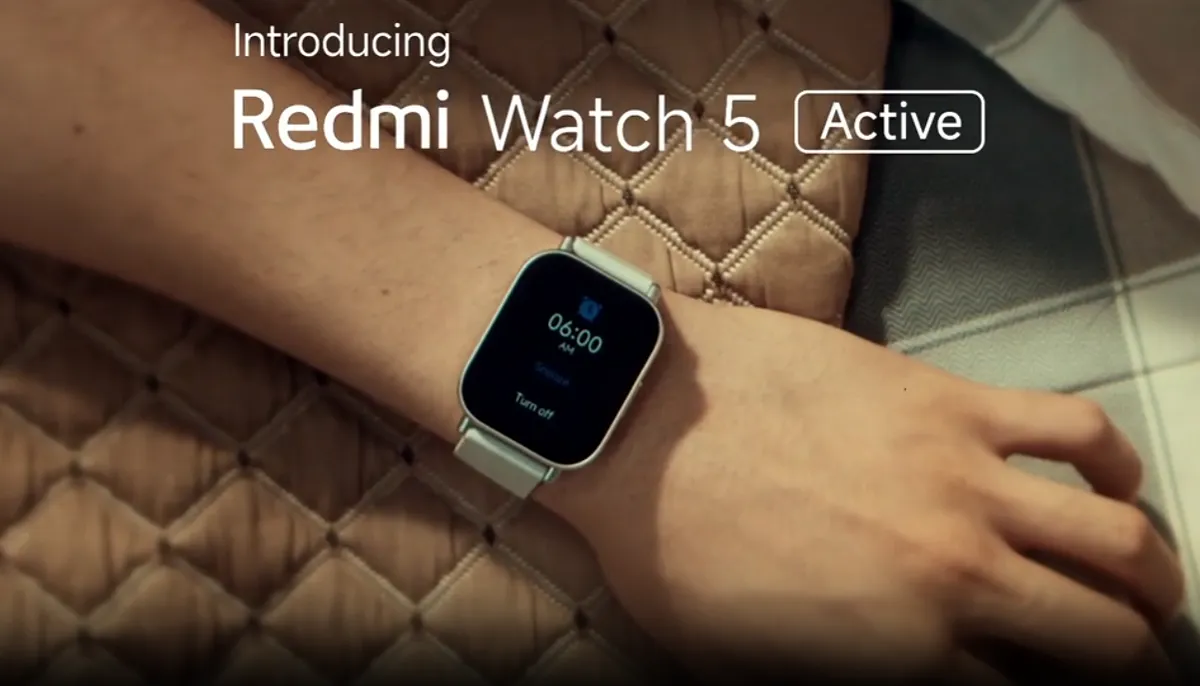
The smartwatch market is flooded with options, but finding a feature-packed yet affordable wearable can be challenging. Xiaomi’s Redmi Watch 5 Active enters the scene as a strong contender, promising premium features at a fraction of the cost of high-end brands.
But does it live up to expectations? In this in-depth review, we’ll examine its design, display, fitness tracking, smart features, battery life, and overall value to help you decide if it’s the right smartwatch for you.
1. Design & Build Quality: Sleek, Lightweight, and Practical
Aesthetics & Comfort:
- The Redmi Watch 5 Active sports a minimalist, modern design with a square-shaped dial, making it look more premium than its price suggests.
- The lightweight plastic body (just 36g) ensures comfort even during long wear.
- The silicone strap is soft, adjustable, and sweat-resistant—ideal for workouts.
Display Quality:
- 1.43-inch TFT LCD (320 x 360 pixels) – Bright and sharp enough for daily use.
- Touchscreen responsiveness is smooth, with minimal lag.
- Always-On Display (AOD) support (though it drains battery faster).
- 5ATM water resistance (can withstand swimming and showers).
Color Options:
Available in Black, Blue, Pink, and Ivory, catering to different style preferences.
2. Fitness & Health Tracking: A Solid Performer
Comprehensive Workout Modes:
- Supports 120+ sports modes, including:
- Running, cycling, swimming, HIIT, yoga, and more.
- Auto-workout detection (recognizes walking/running automatically).
Advanced Health Sensors:
- 24/7 Heart Rate Monitoring – Tracks resting and active heart rates.
- SpO2 (Blood Oxygen) Sensor – Useful for altitude training and health checks.
- Sleep Tracking – Analyzes deep, light, and REM sleep stages.
- Stress Monitoring – Helps manage daily stress levels.
GPS & Accuracy:
- Built-in GPS (not as precise as high-end watches but decent for runs/hikes).
- Syncs with Xiaomi Wear/Zepp app for detailed workout analysis.
3. Smart Features: Beyond Just Fitness
Notifications & Connectivity:
- Call, SMS, and app alerts (WhatsApp, Instagram, etc.) with quick replies (Android only).
- Music control (play/pause/skip tracks from your wrist).
- Camera shutter control – Great for group photos.
Additional Conveniences:
- Weather updates:
- Find My Phone feature
- Idle reminders (nudges you to move if inactive too long)
App Support & Customization:
- 100+ watch faces (downloadable via Xiaomi Wear app).
- Customizable quick settings (brightness, DND, etc.).
4. Battery Life: A Major Selling Point
- Up to 10 days on a single charge (with moderate use).
- Heavy usage (GPS + AOD) drains it in ~3-4 days.
- Fast charging (0-100% in ~2 hours).
5. Performance & Software Experience
- Smooth UI (better than older Redmi watches).
- Occasional lag when switching apps.
- Reliable syncing with Android/iOS (but some iOS features are limited).
6. Price & Competition: Is It Worth It?
Price Range: ₹3,000 – ₹4,500 (~$40-$60)
Competitors Compared
| Feature | Redmi Watch 5 Active | Amazfit Bip 5 | Realme Watch 3 |
|---|---|---|---|
| Display | 1.43″ LCD | 1.91″ LCD | 1.8″ LCD |
| GPS | Yes | Yes | No |
| Battery | 10 days | 10 days | 7 days |
| SpO2 | Yes | Yes | Yes |
| Price | ₹3,499 | ₹5,999 | ₹3,499 |
Verdict: If you want a budget-friendly smartwatch with solid features, the Redmi Watch 5 Active is a great pick. Ideal for fitness lovers and everyday users!
With a price tag of USD 55 million, the Graff Diamonds Hallucination is the most expensive watch in the world in 2025.

Redmi Watch 5 Active with 18 Days Battery Life
Luxury Watches Under 1 Lakh in India
Which is the most expensive watch in the world in 2025?
10 Affordable Luxury Watches in India – Rs.50,000 to Rs.1 lakh
Which Watch Virat Kohli Wears and its Cost? Virat Kohli Watch Collection
15 best apple watch straps to suit any style and occasion
Why Is Patek Philippe So Valuable?
📌 What is Facebook Campaign Bid Strategy?
Pincode targeting vs radius targeting which is good in Facebook ads

How Smartwatches Influence Discipline & Daily Routines: A Simple Guide to a More Organized You

HOW SMARTWATCH SHAPE YOUR MORNING MOOD

HOW YOUR SKIN ADAPTS TO SMARTWATCH SENSORS

MINIMALIST SETTINGS EVERY SMARTWATCH USER SHOULD TRY

CAN SMARTWATCH DATA PREDICT MAJOR LIFE CHANGE ?

PSYCHOLOGY BEHIND CHECKING YOUR WRIST
WRIST -BASED CONFIDENCE: HOW WEARABLES IMPROVE SELF – IMAGE
NO

EVOLUTION OF SMARTWATCH
How Smartwatches Influence Discipline & Daily Routines: A Simple Guide to a More Organized You
Why Is Patek Philippe So Valuable?
-

 Luxury Watches1 year ago
Top 10 Most Expensive Watches in India – Is Buying a Rs.1 Crore Watch Worth It?
-

 Smart Watches1 year ago
16 Best Smartwatches UNDER ₹1000 – Budget Smartwatch in India
-

 Luxury Watches1 year ago
Top 10 Ultra Luxury Watch Brands Worn by Billionaires
-

 Luxury Watches1 year ago
GST on Luxury Watches in India: A Complete Guide
-

 Luxury Watches1 year ago
Best Brand Watches for Men in India (2025)
-

 Smart Watches1 year ago
The Best Smartwatches Under ₹2000 in India for 2025: Your Ultimate Guide
-

 Smart Watches1 year ago
Fire‑Boltt Ring X Features: BT Calling, Battery, Display and Price
-

 News1 year ago
Redmi Watch Move: Features, Specs, Price, and Everything We Know So Far